A metalworker finishes a cut, lifts the grinder, and notices that the disc has started to wobble. A small vibration becomes a sudden jolt. The tool kicks back, and a routine workshop task turns into an emergency. Situations like this can happen when a disc is damaged, the guard is missing, or the operator loses control of the tool.
An angle grinder is useful for cutting metal, removing welds, trimming masonry, and preparing surfaces. However, its high-speed rotating disc can cause severe injuries when the tool is handled incorrectly. Fragments from a broken disc can travel at high speed. Sparks can ignite nearby materials, while dust and noise can create health risks.
Good angle grinder safety is not limited to wearing gloves or safety glasses. It starts with choosing the correct tool and accessory, checking the guard, preparing the work area, and understanding how the disc behaves during a cut. This guide explains the precautions that matter most, with practical advice for workshops, construction sites, and home projects.
Understanding Angle Grinder Hazards
An angle grinder uses a rapidly rotating disc to cut, grind, or finish a material. The tool’s compact design makes it convenient, but the speed and exposed working area create several hazards. Operators need to understand these risks before selecting an accessory or starting work.
Disc Breakage and Flying Fragments
A damaged or incorrectly fitted disc can fracture during operation. The resulting fragments may strike the operator or nearby workers. Disc failure can happen because of cracks, incorrect mounting, excessive speed, unsuitable accessories, or side pressure on a cutting disc.
The danger is not limited to old accessories. A new disc can also fail if its speed rating does not match the grinder or its mounting arrangement is incorrect. Even a small mismatch between the disc bore and spindle flange can create unsafe conditions.
Kickback and Loss of Control
Kickback occurs when the disc catches, pinches, or binds in the workpiece. The grinder can move suddenly in the opposite direction of the disc’s movement at the contact point. This can cause serious cuts or make the operator lose control.
Cutting through a pipe, sheet, or metal section can create binding if the material shifts or closes around the disc. Poor body position and excessive pressure make the situation harder to control. Angle grinder safety therefore depends on securing the workpiece and anticipating how it may move as the cut progresses.
Sparks, Dust, and Noise
Grinding and cutting create hot sparks and small particles. These can injure the eyes, burn exposed skin, or ignite combustible materials. Cutting masonry, concrete, and certain metals can also release hazardous dust or fumes.
Noise exposure is another concern. Repeated use without suitable hearing protection can contribute to permanent hearing damage. Operators should assess all these hazards rather than focusing only on direct contact with the disc.
Why the Grinder Guard Must Stay in Place
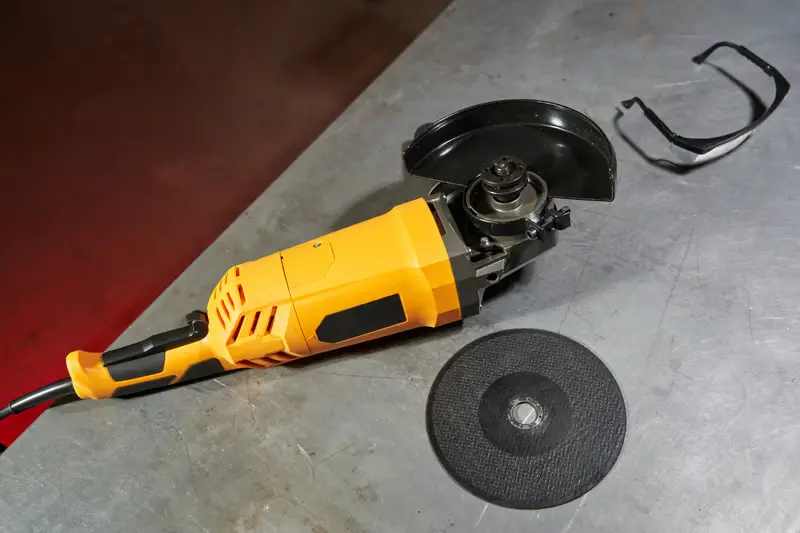
The guard is one of the most important protective features on an angle grinder. It creates a barrier between the operator and part of the rotating disc. It can also help deflect sparks and fragments away from the user’s body.
Correct Guard Positioning
A guard must be compatible with the grinder and the accessory being used. It should be secured firmly and positioned between the operator and the exposed disc area. Its orientation should direct sparks and possible fragments away from the operator and other people.
Before starting work, check that the guard is not cracked, bent, loose, or incorrectly installed. A guard that moves during operation may expose areas that should remain protected. Never use a grinder with a missing or damaged guard.
The correct guard can vary according to the operation. Cutting and grinding accessories may require different guard arrangements. Follow the grinder and accessory manufacturers’ instructions rather than assuming one guard fits every task.
Never Remove the Guard to Reach a Difficult Area
Removing the guard to make a cut easier creates a serious risk. It leaves more of the disc exposed and removes an important barrier if the accessory breaks. It can also bring the operator’s hands closer to the rotating surface.
If the guard prevents access to the workpiece, reconsider the cutting method. A different tool, accessory, workpiece position, or machine size may be more suitable. A difficult cut is not a reason to remove a safety feature.
OSHA’s construction abrasive-wheel requirements address proper guarding, while workplace safety authorities also warn against using grinders with removed or unsuitable guards.
Choosing and Inspecting Cut-Off Discs
A cut-off disc is designed to slice through material using its thin outer edge. It is not intended for heavy grinding or sideways pressure. Selecting the correct disc is essential because accessories differ in size, thickness, material compatibility, and operating speed.
Match the Disc to the Grinder
Start by checking the grinder’s disc diameter, spindle size, and maximum operating speed. The accessory must be designed for the machine and its mounting system. Its maximum rated speed must be equal to or higher than the grinder’s maximum no-load speed.
Never fit a larger disc simply because it appears to offer a deeper cut. A disc designed for a larger, slower machine may be forced to rotate too quickly on a smaller grinder. This can increase its rim speed beyond safe limits and cause it to break apart.
Also check the disc’s material rating. A disc intended for steel may not be suitable for stainless steel, aluminum, masonry, or other materials. Use an accessory specifically approved for the intended application.
Inspect the Disc Before Installation
Examine the disc for cracks, chips, distortion, moisture damage, and signs of wear. Check its label for the correct size, material, speed rating, and expiration information where applicable. Do not use an accessory with missing or unreadable safety markings.
A disc that has been dropped or struck should be removed from service if its condition cannot be confirmed as safe. Do not attempt to repair a damaged abrasive disc. Replacing a questionable accessory costs far less than dealing with a serious injury.
Fit the Correct Flanges and Tighten Properly
The mounting flanges and locking nut must match the disc and grinder. Different accessories may require different flange arrangements. Follow the manufacturer’s instructions for the correct orientation and tightening method.
Disconnect the power source before changing a disc. For a corded grinder, unplug it. For a cordless model, remove the battery where the manufacturer specifies this procedure. Use the supplied wrench or approved tool to secure the accessory. Excessive tightening can damage the disc or mounting components.
Angle grinder safety also means allowing the tool to reach operating speed before making contact with the material. If the grinder vibrates unusually, makes unexpected noises, or runs unevenly, switch it off and investigate before continuing.
Personal Protective Equipment for Angle Grinder Work
Personal protective equipment reduces exposure to flying particles, noise, sparks, and dust. It should be selected according to the material, task, work environment, and risk assessment. No single item protects against every hazard.
Eye and Face Protection
Wear suitable impact-rated safety glasses or goggles whenever operating an angle grinder. Ordinary prescription glasses and basic fashion eyewear do not provide adequate protection against high-speed particles.
A face shield should be worn over suitable eye protection when the task creates significant sparks or flying debris. A face shield alone may not provide the required impact protection for the eyes. Check that the equipment fits properly and does not obstruct the operator’s view.
Hearing and Respiratory Protection
Grinding can produce high noise levels, especially during extended work or when cutting hard materials. Wear suitable earplugs or earmuffs based on the expected exposure. If workers use grinders frequently, workplace noise assessment can help determine the level of protection required.
Respiratory protection depends on the dust or fumes produced. Cutting concrete and masonry can release respirable crystalline silica, which presents serious long-term health risks. Use suitable dust extraction or other effective engineering controls first. Where exposure remains, select a properly fitted respirator appropriate for the hazard and applicable workplace requirements.
Clothing, Gloves, and Foot Protection
Wear fitted work clothing that covers exposed skin. Avoid loose sleeves, dangling cords, jewelry, and anything that could catch in the rotating disc. Safety footwear helps protect against dropped materials and sharp debris.
Glove selection requires care. Suitable, close-fitting gloves may protect against sharp workpieces and heat, but they must not interfere with grip or tool control. Follow the grinder manufacturer’s instructions and the task-specific risk assessment. Never wear loose or damaged gloves near rotating equipment.
Angle grinder safety improves when protective equipment is checked before every shift. Damaged straps, scratched lenses, poor-fitting respirators, and worn hearing protection can reduce the protection workers expect.
Safe Operating Techniques for Cutting and Grinding
Even a correctly equipped grinder can become dangerous when the operator uses poor technique. A stable stance, controlled movement, and secure workpiece help prevent sudden tool movement.
Secure the Workpiece
Clamp the material or secure it using an appropriate fixture before cutting. Do not hold a small metal piece in one hand while operating the grinder with the other. The workpiece can move, catch the disc, or pull the operator toward the cutting area.
Position the material so the cut remains open rather than closing around the disc. Consider how the offcut will move when the cut is nearly complete. Supporting both sides incorrectly can cause the material to pinch the accessory.
Use Both Hands and Maintain Control
Use the main handle and auxiliary side handle. Position the side handle on the side that provides the strongest and most comfortable grip for the task. Keep both hands on the tool while the disc is in contact with the workpiece.
Stand in a balanced position with clear footing. Keep your body out of the likely kickback path and avoid reaching across the rotating disc. Allow the grinder to do the work. Excessive pressure can slow the motor, increase heat, and make the disc bind.
For a cut-off disc, maintain the cutting position recommended by the manufacturer. Do not twist the disc inside the cut or use its flat side to remove material. Thin cutting discs are not designed to withstand that kind of side loading.
Control Sparks and the Work Area
Direct sparks away from people, electrical cables, fuel, solvents, sawdust, and other combustible materials. Use suitable screens when other workers are nearby. Check whether the work requires a hot-work permit or additional fire precautions.
Keep the power cable behind the tool and away from the cutting path. For cordless grinders, keep batteries and charging equipment away from sparks and hot debris. Never place the grinder down while the disc is still rotating.
Common Angle Grinder Safety Mistakes
Some dangerous habits develop because workers want to finish a task quickly. Removing a guard, forcing a cut, or using an unsuitable disc may seem convenient, but each action increases risk.
One common mistake is using a cut-off disc for grinding. The thin disc can break when exposed to sideways pressure. Use a suitable grinding disc for surface removal and a cut-off disc for cutting.
Another mistake is applying too much pressure. A grinder should not need to be forced through the material. If progress is slow, check the disc type, condition, and suitability instead of pushing harder.
Workers sometimes overlook the workpiece’s position. A pipe or metal section that moves during cutting can trap the disc and cause kickback. Secure it properly and plan how the material will behave as the cut separates.
Ignoring unusual vibration is also dangerous. Stop the tool, disconnect its power, and inspect the disc, flanges, and spindle. Do not continue simply because the grinder still runs.
Final Checks and Maintenance
Safe operation continues after the cut is complete. Switch off the grinder and hold it securely until the disc has stopped rotating. Place it on a stable surface with the disc clear of anything that could damage it.
Disconnect the power before cleaning, servicing, or changing accessories. Inspect the cord, plug, battery connection, switch, guard, and handles. Replace damaged parts through an approved repair process rather than making improvised fixes.
Keep ventilation openings clear of dust and debris. Store discs in dry conditions and protect them from impact, moisture, and extreme temperatures. Follow the accessory manufacturer’s storage instructions and discard discs that have passed their stated use period.
Regular training also matters. New workers should understand the grinder’s controls, disc limitations, guard adjustment, and emergency shutdown procedure before operating it independently. Supervisors should check that the selected tool and cutting method are suitable for the job.
Conclusion
Angle grinders are valuable tools, but their speed leaves little room for careless decisions. A secure guard, suitable cut-off disc, correct PPE, and stable workpiece form the foundation of safer operation. Operators must also understand kickback, control sparks, manage dust, and stop work when vibration or equipment damage appears.
Good angle grinder safety comes from consistent habits, not last-minute precautions. Inspect the tool before use, follow the manufacturer’s instructions, and choose a safer alternative whenever the task does not justify the risks of an angle grinder.
FAQs
1. Can I use an angle grinder without a guard?
No. The guard helps protect the operator from disc fragments and contact with the rotating accessory. If it is missing, damaged, or incompatible, stop using the grinder until the correct guard is installed and secured.
2. Can a cut-off disc be used for grinding?
No. Cut-off discs are thin and designed for cutting with their outer edge. Applying sideways pressure during grinding can damage or fracture the disc. Use a suitable grinding accessory for material removal.
3. What PPE should I wear when using an angle grinder?
Wear impact-rated eye protection, a face shield where required, hearing protection, suitable clothing, and safety footwear. Add respiratory protection and task-appropriate gloves based on the material and risk assessment.
4. How do I know if a cut-off disc is suitable?
Check its diameter, bore, material rating, condition, and maximum speed. The disc’s rated speed must meet or exceed the grinder’s maximum operating speed, and its mounting arrangement must match the machine.
5. What should I do if an angle grinder starts vibrating?
Switch it off, keep it pointed away from people, and wait for the disc to stop. Disconnect the power before inspecting the accessory, flanges, and spindle. Replace damaged parts before using the tool again.