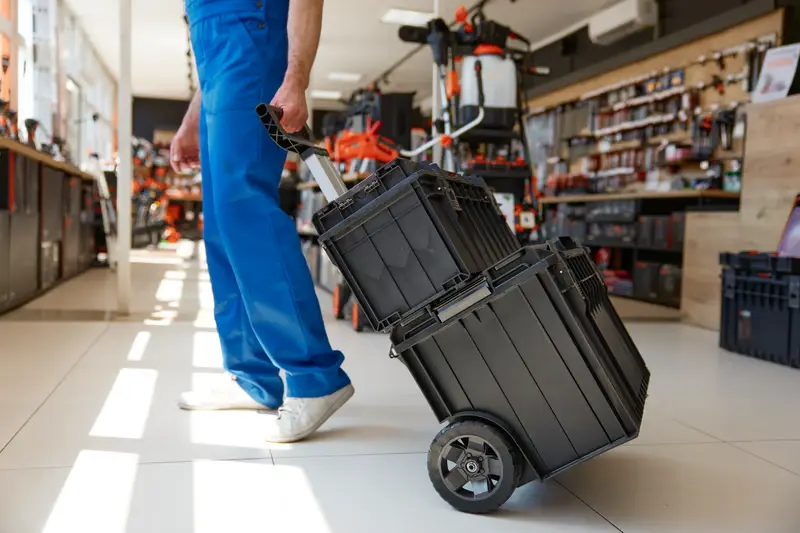
A construction crew can lose valuable time when tools are scattered across a work area or stored too far from the next task. Moving heavy equipment between locations also creates unnecessary strain, especially when workers need to carry several tools at once. A rolling jobsite box helps solve these problems by combining secure storage with wheels that make equipment easier to move.
However, not every storage box is suitable for every work environment. Contractors need to consider capacity, construction materials, locking systems, wheel quality, weather protection, and site conditions before choosing one. A box that works well in a small renovation project may not withstand the demands of a busy commercial construction site.
This guide explains how a rolling jobsite box supports tool storage and mobility, which features matter most, how to organize equipment, and how to maintain security over time. It also covers practical selection advice for contractors, tradespeople, and maintenance teams.
What Is a Rolling Jobsite Box?
A rolling jobsite box is a mobile storage container designed to hold tools, accessories, and equipment in construction or maintenance environments. It usually has a rigid body, a hinged lid, a locking arrangement, and wheels that allow workers to move stored items without carrying the entire load.
These boxes are available in different sizes and materials. Some are compact enough for hand tools and small power tools. Larger models can hold bulky equipment, extension cords, fastening supplies, and several tool cases.
The main difference between a standard tool chest and a rolling jobsite box is its intended use. A traditional chest may remain in a workshop or garage. A jobsite box is designed for movement, repeated handling, and exposure to demanding work conditions.
Some models have large wheels and pull handles for movement across rough surfaces. Others use smaller casters intended for smoother floors. Certain designs include reinforced corners, gas-assisted lid supports, removable trays, and integrated locking points.
A rolling jobsite box does more than keep tools together. It gives workers a central storage location, reduces unnecessary trips, and makes it easier to move equipment as a project changes.
Why Tool Storage Matters on a Jobsite
Poor tool organization affects more than appearance. It can slow down work, increase replacement costs, and create safety risks. When workers cannot find the right equipment quickly, they may interrupt tasks, borrow tools from other crews, or leave materials in unsuitable locations.
Reduce Time Spent Searching for Tools
A well-organized storage system gives each tool a designated place. Workers can identify missing items more quickly and return equipment after use. This is particularly useful when several trades share the same work area.
For example, an electrical contractor may need testers, screwdrivers, pliers, cable preparation tools, and small installation accessories throughout the day. Keeping these items in one mobile unit reduces the need to walk back to a vehicle or workshop.
The benefits increase when workers establish a consistent arrangement. Frequently used tools should remain easy to reach, while occasional-use equipment can stay in deeper compartments or separate cases.
Protect Equipment from Jobsite Damage
Tools face several risks during construction work. They may be dropped, struck by building materials, exposed to dust, or damaged when heavy items are stacked on top of them.
A durable storage box creates a protective barrier between equipment and the surrounding work area. Reinforced walls and a strong lid can help protect contents from accidental impacts. Internal trays and dividers can also reduce movement when the box is transported.
Storage does not replace careful tool handling, but it can reduce avoidable damage and help extend equipment life.
Improve Worksite Safety
Tools left on floors, walkways, and access routes can create trip hazards. Sharp accessories and loose equipment may also cause injuries when workers reach into poorly organized piles.
A dedicated storage location helps keep the work area more orderly. It also makes end-of-shift checks easier because workers can see whether tools have been returned.
The box should still be positioned carefully. It must not block emergency exits, electrical panels, fire equipment, or designated access routes.
Important Features to Consider When Choosing a Rolling Jobsite Box
The right box should match the tools being stored and the conditions in which it will be used. Looking only at external dimensions or advertised capacity can lead to a poor purchase.
Construction Material and Durability
Material choice affects weight, impact resistance, maintenance, and long-term performance.
Steel boxes are commonly selected for demanding environments. They can provide strong physical protection, especially when the body, lid, and corners are properly reinforced. However, steel adds weight and may require attention to corrosion protection in damp conditions.
Heavy-duty plastic boxes are often lighter and easier to move. They do not rust, and suitable designs can resist moisture and everyday impacts. Their performance depends on the plastic formulation, wall thickness, structural reinforcement, and quality of the hinges and handles.
Aluminum boxes offer a balance between strength and weight. They can be useful when workers need a portable storage solution but still want a rigid enclosure. Buyers should check the construction and locking arrangement rather than assume that a metal exterior guarantees high security.
For any material, inspect the lid, base, seams, corners, and attachment points. These areas experience repeated stress during transport and daily use.
Wheel Quality and Mobility
Wheels determine how easily a rolling jobsite box moves across different surfaces. A box with excellent storage capacity can become difficult to use if its wheels are too small or poorly attached.
Large wheels are generally more suitable for rough construction surfaces. They can handle small obstacles and uneven ground more effectively than small furniture-style casters. Rubber or other suitable wheel materials may also improve grip and reduce noise on certain surfaces.
Check the wheel mounting points, axle construction, and overall load rating. Wheels must support the weight of the box and its contents. A heavily loaded unit can place significant stress on these components.
Consider the route the box will travel. Smooth warehouse floors require different wheel characteristics from gravel, unfinished concrete, or outdoor construction areas.
Locking System and Security
Security is a major consideration because tools are valuable and often remain on site after workers leave. A rolling jobsite box should have a locking arrangement that suits the risk level and the storage location.
Some models include built-in locks. Others use reinforced hasps or padlock-compatible points. Check whether the locking hardware is protected from easy access and whether the lid closes securely without excessive movement.
A lock alone does not make a storage box theft-proof. A determined person may attack weak hinges, thin panels, or exposed locking points. Look at the complete construction rather than focusing only on the lock.
For high-value equipment, contractors may need additional measures such as securing the box to a fixed structure, keeping it inside a locked vehicle or storage area, and recording tool serial numbers.
Capacity and Internal Organization
Choose capacity based on the tools you actually use. An oversized box may be difficult to move and encourage workers to store unrelated materials inside it. A box that is too small can become overcrowded, making tools harder to retrieve.
Look for practical internal features such as removable trays, dividers, compartments, and space for larger equipment. A combination of open storage and smaller sections often works well for mixed tool collections.
Check the usable internal dimensions rather than relying only on the external measurements. Lid supports, wheel housings, and internal reinforcement can reduce available space.
How to Organize Tools Inside a Rolling Jobsite Box
Good organization makes mobile storage more useful. The aim is to protect equipment, make frequently used items accessible, and prevent the contents from shifting during movement.
Group Tools by Task
Start by grouping equipment according to the work performed. An electrician may separate testing equipment, hand tools, cable accessories, and protective equipment. A carpenter may organize measuring tools, layout equipment, fastening tools, and small cutting accessories.
This approach makes it easier to prepare for specific tasks. Workers can also identify which tools belong in the box and which should remain in another storage area.
Avoid mixing sharp accessories with delicate measuring instruments. Separate compartments reduce the risk of damage and make retrieval safer.
Keep Heavy Equipment Low
Place heavier tools near the bottom of the box. This lowers the center of gravity and can make the loaded unit more stable when moving it.
Keep frequently used equipment near the top or in removable trays. Workers should not have to unload half the box to reach a screwdriver or measuring tape.
Do not exceed the manufacturer’s load rating. Overloading can damage wheels, handles, hinges, and the box structure. It may also make the unit difficult to control on slopes or uneven ground.
Use Inventory Checks
A simple tool inventory can prevent equipment from being misplaced between shifts. Workers can check essential items before leaving the site and again when returning the box to storage.
For larger teams, a printed checklist or digital inventory can record tool names, identification numbers, and assigned users. High-value tools should be tracked separately where appropriate.
The box should also have a clear arrangement that workers understand. A consistent layout makes it easier for different team members to return tools to the correct location.
Using a Rolling Jobsite Box Across Different Work Environments
The storage requirements of a residential renovation project differ from those of a large construction site. Choosing a box based on the actual working environment improves usability and helps avoid unnecessary expense.
Residential Renovation Projects
Residential contractors often work in several rooms or move between properties. A compact rolling jobsite box can keep essential tools together while allowing workers to move equipment through suitable access routes.
Weight and overall dimensions matter in these settings. The box must fit through doors and around furniture without causing damage. Workers should also consider stairs, narrow corridors, and floor protection.
A smaller unit may be more practical than a large industrial box when the tool collection is limited.
Commercial Construction Sites
Commercial sites often involve more workers, larger tool collections, and longer project schedules. A heavy-duty rolling jobsite box may provide a central storage point for frequently used equipment.
Durability and security become especially important when the box is exposed to repeated movement or remains on site overnight. Contractors should consider where it will be stored, how it will be secured, and who will have access.
For larger teams, separate boxes for different trades can reduce congestion and make responsibility clearer.
Maintenance and Facility Operations
Maintenance teams may need to move tools between plant rooms, service corridors, workshops, and other areas. A rolling box helps keep essential equipment together and reduces the number of trips required.
In these environments, maneuverability and internal organization may matter more than extreme impact resistance. The box should fit through access doors and move safely across the floor surfaces found in the facility.
Security Practices That Help Protect Stored Tools
A secure box is only one part of a wider tool protection plan. Contractors should combine suitable storage hardware with sensible site procedures.
First, keep the box in a controlled location whenever possible. A locked room, secured vehicle, or monitored storage area provides an additional barrier against theft. Avoid leaving valuable equipment in visible or easily accessible locations.
Second, secure the box itself if the design and site conditions allow it. A suitable anchor point can make removal more difficult. Confirm that the attachment method does not damage the box or create a safety hazard.
Third, manage access. Not every worker needs access to every tool collection. Assign responsibility for keys or access codes and establish a clear process for handing them over between shifts.
Finally, maintain an inventory of expensive equipment. Record identifying details, purchase information, and serial numbers where available. Clear records can help with insurance claims and recovery efforts if tools are stolen.
Maintenance Tips for Long-Term Performance
A rolling jobsite box needs regular inspection, especially when it carries heavy equipment or travels across rough surfaces.
Check the wheels and axles for wear, loose fasteners, cracks, and damage. Remove debris that may interfere with movement. If the manufacturer specifies lubrication or other maintenance, follow those instructions.
Inspect hinges, lid supports, handles, and locking points. These parts are used repeatedly and can loosen or wear over time. A damaged lid support may allow the lid to fall unexpectedly, creating an injury risk.
Clean the interior periodically. Dust, metal shavings, moisture, and spilled materials can damage tools or interfere with moving parts. Dry the box when moisture collects inside, and check for corrosion if it has a metal body.
Do not drag an overloaded box down stairs or across obstacles. Use an appropriate lifting method or another transport solution when the route is unsuitable for rolling. Also, avoid standing or sitting on the lid unless the manufacturer specifically rates it for that purpose.
Common Buying Mistakes to Avoid
One frequent mistake is choosing a box based only on its advertised capacity. Large storage space is useful, but it does not guarantee suitable wheel strength, security, or internal organization.
Another mistake is overlooking the loaded weight. A box that is easy to move when empty may become difficult to control after tools are added. Consider the combined weight of the enclosure and equipment.
Some buyers also assume that all weather-resistant boxes provide the same protection. Check the manufacturer’s stated level of protection and whether the design is suitable for the expected exposure. A water-resistant lid should not automatically be treated as a fully waterproof enclosure.
Finally, avoid paying for features that do not support actual work requirements. A large industrial unit may be unnecessary for a small service team. The best choice is one that fits the tool collection, work environment, security needs, and available budget.
Conclusion
A rolling jobsite box combines organized tool storage with the mobility needed on active construction and maintenance sites. The right design can reduce time spent searching for equipment, protect tools from everyday damage, and make it easier to move supplies between work areas.